

デバイスはより小さく、材料はより賢く──次世代医療技術を支える貴金属材料
引用元:MD+DI(Medical Device and Diagnostic Industry)
日 付:2026年10月29日
著 者:Yuki Horinouchi(田中貴金属工業株式会社 伊勢原工場 材料開発セクション セクションチーフマネージャー)
Yusuke Minagawa(田中貴金属工業株式会社 医療機器材料 プロダクトマネージャー)
リンク:Smaller Devices, Smarter Materials Enable Next-Generation Medical Technology
貴金属材料と合金の進歩が、強度、X線不透過性、製造性を最適化し、より小さく、より高機能な医療機器を可能にしている。
医療機器が小さくなるにつれ、材料選定は簡単になるどころか、むしろ複雑になっている。エンジニアが使える材料は減る一方で、その材料に求められる役割は増えている。今日のデバイスは、ますます小さくなる形状の中で確実に機能しながら、より精密な手技を支えなければならない。ガイドワイヤやカテーテルシステムから、植込み型の心臓用・ニューロモデュレーション用リード、持続血糖測定器、センサー部品、診断技術に至るまで、その対象は幅広い。
材料の専門家がこの課題に応えるには、貴金属合金に関する専門性と、精密加工やデバイス製造の要件に対する深い理解を組み合わせる必要がある。同じく重要なのは、サプライヤーが顧客と緊密に連携し、医療機器材料に対するそれぞれのニーズに合わせた新しい合金を開発していくことである。
小型化が材料選定のルールを変える
低侵襲手技や画像誘導下での手技の拡大が、より小さく高機能なデバイスへの需要を加速させている。この流れは、低侵襲手術器具や、マイクロカテーテルなどの専門デバイスの市場予測にも表れており、いずれも今後数年にわたって成長が続くと見込まれている。医療機器のサプライチェーン全体で、この傾向は、より細い外径、より高い精度、そして信頼性の高い性能を支える材料・部品技術の重要性を高めている。
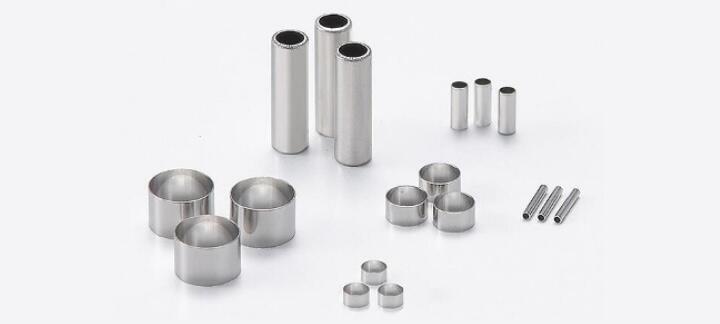
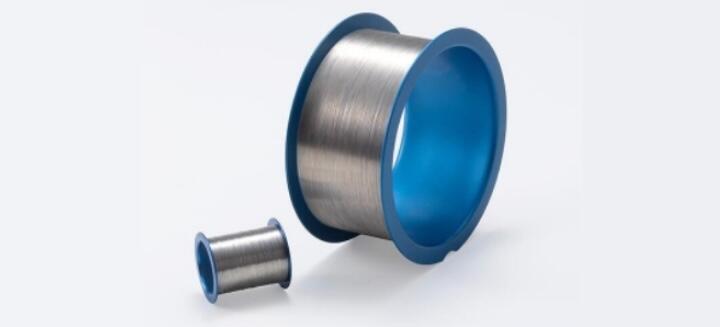
部品が薄く、複雑になるにつれて、エンジニアはより厳しい寸法公差、より複雑な形状、より高い性能要求に直面する。寸法が小さくなると、材料の個々の特性を独立して最適化する自由度が小さくなることがある。一つの部品に、耐久性、導電性、耐食性、X線不透過性、製造性のすべてを、小型化された設計の中で持たせなければならない場合もある。たとえば田中貴金属は、線径10µmまでの白金系極細線や、外径0.3mm・肉厚0.02mmからの白金(Pt)または白金合金製リングを提供できる。
そのバランスは用途によっても異なる。X線不透過マーカーではX線での視認性と寸法精度が特に重視される一方、電極では電気的・機械的・表面特性の別の組み合わせが求められることがある。用途によっては、材料の純度や合金組成も重要な検討事項となる。そのためエンジニアは、ある材料が複数の要件をどれだけ同時に満たせるかを評価しなければならず、(私たちのような)材料の専門家が材料選定についての指針を提供することになる。

X線不透過性に見る課題
X線不透過性の重要性が増していることは、エンジニアリング上の要件がどう変わりつつあるかをよく示している。
血管内治療をはじめとする画像誘導下の手技では、X線不透過性の材料によって、医師はX線画像上でカテーテルやガイドワイヤなどの部品の位置を把握できる。デバイスが小さくなり手技が複雑になるにつれ、限られた部品寸法の中で十分な視認性を確保することは、材料上の重要な検討事項となる。
こうした期待に応えるには、X線不透過性の材料を選ぶだけでは足りない。エンジニアは、X線不透過性が他の重要な特性とどう関わり合うかも考慮しなければならない。
白金(Pt)および白金-イリジウム(Pt-Ir)を含むPt系合金は、小さな寸法でも高いX線視認性を得られることから、医療機器部品に用いられる重要なX線不透過材料である。たとえばPt-Irリングはカテーテル用途に使われ、Pt-Ir、Pt-Ni、Pt-Wなどの白金合金ワイヤは、ガイドワイヤ先端コイルや塞栓コイルなどの医療機器用途向けに提供されている。
金(Au)をはじめとする他の貴金属も高いX線不透過性を備えており、カテーテルやガイドワイヤのマーカーなどの用途に使われている。
実際には、X線不透過性は選んだ材料だけでなく、組成や、X線の経路上にあるX線不透過材料の体積・厚みといった要素にも左右される。したがって目指すべきは、X線不透過性をひたすら高めることではなく、想定する用途にとって適切なバランスを実現することである。
貴金属は、X線不透過性以外の特性ももたらしうる。白金、イリジウム、金は、生体適合性が重要な検討事項となる用途で使用実績があり、また酸化や腐食に対する耐性は、材料と部品の性能維持が不可欠な場面で価値を発揮する。
相反する材料特性のバランスをとる
小型部品の材料選定では、X線不透過性と、強度、曲げ性、伸びといった機械的特性とのバランスをとる必要が生じることがある。
純粋な貴金属は優れたX線不透過性を示すことが多いものの、ますます厳しくなる用途に必要な機械的強度を備えていない場合がある。合金化は強度を高める一般的な手法だが、組成の変化はX線不透過性にも影響しうるため、材料開発には慎重な最適化が必要となる。つまり材料選定では、単一の特性を切り離して最適化するのではなく、想定する用途に必要な特性の組み合わせを考慮しなければならない。
機械的強度とX線不透過性の適切なバランスを実現するには、貴金属を選ぶだけでは不十分である。合金化は強度を高められる一方で、貴金属の比率が下がるにつれてX線不透過性を低下させることもある。そのため、加工熱処理によって、変形組織や第二相析出物を含む微細組織を制御することも、強度とX線不透過性のバランスを最適化するうえで重要な検討事項となる。
精密製造も材料ソリューションの一部
材料の性能だけでは十分ではない。デバイスが小さくなるにつれ、精密部品を製造できる能力も同じように重要になる。
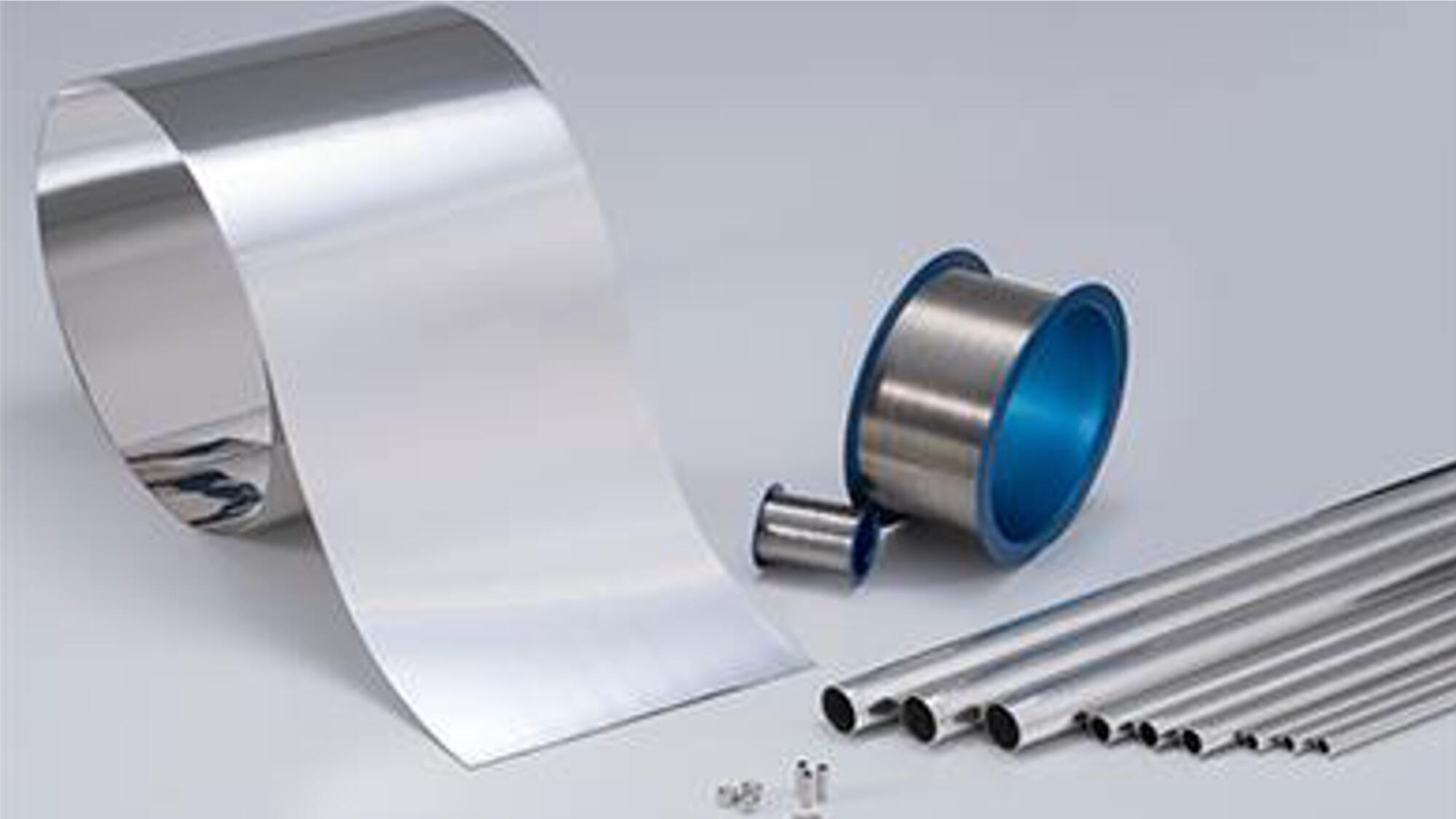
医療機器用途の貴金属は、極細線、ロッド、リング、スポンジ、粉末、めっき材料、ボンディングワイヤ、チューブ、シート、はんだペースト、箔など、さまざまな形態をとりうる。
これらの形態をますます小さな寸法で製造するには、適切な材料と精密な加工の両方が必要であり、ISO 13485に従って管理された信頼性の高い生産体制がそれを支える。
極細線の伸線、介在物の少ない10ミクロンまでの極薄圧延、精密機械加工、レーザー加工といったプロセスには、生産工程全体を通じた入念な管理が求められる。このスケールでは、加工や材料の取り扱いにおけるわずかなばらつきでも、製造の均一性に影響を及ぼしうる。
その一例が、医療機器部品向けの高X線不透過性貴金属素材群である、田中貴金属のVisi Fine®シリーズだ。このシリーズは、複数の溶解技術、極細線加工、レーザー加工を含む、先進的な貴金属の開発・加工能力に基づいている。ガイドワイヤや塞栓用のコイル、カテーテルのコイルマーカー、ステントの編組構造などの用途で、部品に組み込むことができる。
材料工学と製造を見据えた設計(DFM)とのこうした関係は、デバイス開発の早い段階から材料要件を検討することの価値も浮き彫りにしている。
協業がイノベーションを生む
小型部品の中で複数の要件のバランスをとらなければならない場合や、それらの要件を支える新材料を開発する場合には、材料の専門家と医療機器メーカーとの早期のコミュニケーションが大きな意味を持つ。
適格な専門家・設計パートナーには、材料開発、精密加工、分析・評価の専門性に加え、地金の調達から材料の加工・製造、さらに貴金属リサイクルまでを網羅するエンドツーエンドのサービスモデルが求められる。デバイスメーカーは用途や製品開発の要件に関する理解をもたらし、田中貴金属は個々の部品要件に応じた材料のカスタマイズと加工を支援できる。寸法、機械的特性、X線不透過性、材料形態、加工要件を早期に話し合うことで、生産開始前に材料や製造上の制約を見つけ出しやすくなる。
このアプローチは、次世代医療機器の高度な要件を支えながら、開発の加速にもつながる。
今後の展望
小型化が今後も進むことで、より細い線径のワイヤやチューブ、より薄いシートや箔、そしてより精密な二次加工が、いっそう重視されるようになると見込まれる。
医療機器が小さくなるにつれ、材料の進歩だけでは十分ではなくなる。一部の血管内デバイスでは、極細線やチューブで作られた複雑な編組構造が、材料の小型化に伴う機械的強度の低下を補う役割を果たしうる。変化し続ける要件に応えられるかどうかは、材料特性、機械的挙動、デバイス設計、加工技術を一体として検討できるかに、ますますかかってくる。
医療機器材料を専門とする組織には、材料を供給するだけでなく、材料特性、加工技術、製造能力がどのように組み合わさって複雑な設計課題を解決するのかを、エンジニアが理解できるよう導く専門性が求められる。
医療機器技術が進化する中で、材料選定は今後も重要なエンジニアリング分野であり続けるだろう。そして材料選定の成否は、組成、部品設計、加工がどのように連動するかを理解できるかどうかに、ますます左右されるようになる。
ご案内
「MD&M Midwest 2026」(2026年10月28日〜29日)のBooth 3913にて、田中貴金属とMetalorが最新の医療機器材料をご紹介します。
田中貴金属の医療機器材料に関するお問い合わせは、こちらから:産業用製品に関するお問い合わせ
田中貴金属の医療機器材料に関する免責事項をご参照ください。
著者紹介

Yuki Horinouchi
田中貴金属工業株式会社 伊勢原工場 材料開発セクション セクションチーフマネージャー
九州工業大学で材料工学の修士号を取得後、2010年に田中貴金属工業に入社。2011年以降、医療機器、センサー、半導体用プローブピンなどの用途に向けた貴金属線材の開発と製品化に携わってきた。2026年から材料開発セクションのセクションチーフマネージャーを務め、PGM材料の開発を担当している。

Yusuke Minagawa
田中貴金属工業株式会社 医療機器材料 プロダクトマネージャー
ハードディスクドライブ(HDD)や単結晶育成の分野を含む、エレクトロニクス領域の営業・マーケティングで豊富な経験を持つ。貴金属材料に関する専門性を生かし、2022年から田中貴金属工業で医療用途の先端材料のプロダクトマネージャーを務めている。
※編集者注:貴金属とは、金(Au)、銀(Ag)、白金(Pt)、パラジウム(Pd)、イリジウム(Ir)、ロジウム(Rh)、ルテニウム(Ru)、オスミウム(Os)の8元素を指す。
【記事引用元】Smaller Devices, Smarter Materials Enable Next-Generation Medical Technology
本記事は、許可を得て、田中貴金属が翻訳・掲載しました。
関連情報

Source: MD+DI (Medical Device and Diagnostic Industry)
Date: October 29, 2026
Authors: Yuki Horinouchi (Section Chief Manager, Materials Development Section, Isehara Plant, TANAKA PRECIOUS METAL TECHNOLOGIES Co., Ltd.)
Yusuke Minagawa (Product Manager, Medical Device Materials, TANAKA PRECIOUS METAL TECHNOLOGIES Co., Ltd.)
Link: Smaller Devices, Smarter Materials Enable Next-Generation Medical Technology
Advances in precious metal materials and alloys optimize strength, radiopacity, and manufacturability for smaller, more capable medical devices.
As medical devices become smaller, material selection is becoming more, not less, complex. Engineers have less material to work with, yet that material is being asked to do more. Today’s devices must perform reliably within ever-smaller form factors while supporting increasingly precise procedures — from guidewires and catheter systems to implantable cardiac and neuromodulation leads, continuous glucose monitors, sensor components, and diagnostic technologies.
For materials specialists, addressing this challenge requires combining expertise in precious metal alloys with a detailed understanding of precision processing and device-manufacturing requirements. It is equally important for suppliers to work closely with customers to develop new alloys tailored to their specific needs for medical device materials.
Miniaturization changes the rules of material selection
The continued growth of minimally invasive and image-guided procedures has accelerated demand for smaller, more capable devices. This direction is also reflected in market forecasts for minimally invasive surgical instruments and specialized devices such as microcatheters, both of which are expected to see continued growth over the coming years. Across the medical-device supply chain, this trend is increasing the importance of materials and component technologies that can support smaller profiles, greater precision, and reliable performance.
As components become thinner and more intricate, engineers face tighter dimensional tolerances, more complex geometries, and greater performance expectations. At smaller dimensions, engineers may have less flexibility to optimize individual material characteristics independently. A component may need to provide durability, electrical conductivity, corrosion resistance, radiopacity, and manufacturability — all within a miniaturized design. For example, TANAKA can provide platinum-based fine wire down to 10 µm in diameter, as well as platinum (Pt) or its alloy-based rings with outer diameters from 0.3 mm and wall thicknesses from 0.02 mm.
The balance also varies by application. A radiopaque marker may place particular emphasis on X-ray visibility and dimensional precision, while an electrode may require a different combination of electrical, mechanical, and surface characteristics. Material purity and alloy composition may also be important considerations depending on the application. Engineers must therefore evaluate how well a material satisfies multiple requirements simultaneously, with materials specialists (such as our organization) providing guidance on material selection.
Radiopacity illustrates the challenge
The growing importance of radiopacity illustrates how engineering requirements are changing.
In endovascular and other image-guided procedures, radiopaque materials help clinicians identify the position of catheters, guidewires, and other components under X-ray imaging. As devices become smaller and procedures more complex, achieving sufficient visibility within constrained component dimensions becomes an important materials consideration.
Meeting these expectations requires more than choosing a radiopaque material. Engineers must also consider how radiopacity interacts with other critical properties.
Pt and Pt-based alloys, including platinum-iridium (Pt-Ir), are important radiopaque medical device materials for components because they can provide strong X-ray visibility within small dimensions. Pt-Ir rings, for example, are used in catheter applications, while platinum-alloy wires, including Pt-Ir, Pt-Ni, and Pt-W, are available for medical-device applications such as guidewire tip coils and embolic coils.
Other precious metals, including gold (Au), can also provide high radiopacity and are used in applications such as markers for catheters and guidewires.
In practice, radiopacity depends not only on the material selected but also on factors such as composition and the volume and thickness of the radiopaque material in the X-ray path. The objective is therefore not to maximize radiopacity alone, but to achieve the right balance for the intended application.
Precious metals can also offer characteristics beyond radiopacity. Platinum, iridium, and gold have established use in applications where biocompatibility is an important consideration, while their resistance to oxidation and corrosion can be valuable where maintaining material and component performance is critical.
Balancing competing material properties
Material selection for miniaturized components can involve balancing radiopacity with mechanical properties such as strength, bendability, and elongation.
Pure precious metals often provide excellent radiopacity but may not offer the mechanical strength required for increasingly demanding applications. Alloying is a common approach to increasing strength, but material development requires careful optimization because changes in composition can also affect radiopacity. This means material selection requires consideration of the combination of properties needed for the intended application, rather than optimizing a single property in isolation.
Achieving the right balance between mechanical strength and radiopacity requires more than simply selecting a precious metal. Alloying can improve strength, but it may also reduce radiopacity as the proportion of precious metal decreases. Controlling microstructure — including deformation microstructures and second-phase precipitates — through thermomechanical processing is therefore another important consideration when optimizing the balance between strength and radiopacity.
Precision manufacturing is part of the material solution
Material performance alone is not enough. As devices become smaller, the ability to manufacture precision components becomes equally important.
Precious metals for medical-device applications can take a variety of forms, including fine wires, rods, rings, sponge, powders, plating materials, bonding wires, tubes, sheets, solder pastes, and foils.
Producing these forms at increasingly smaller dimensions requires both suitable materials and precise processing, supported by a reliable production system managed in accordance with ISO 13485.
Processes such as fine-wire drawing, ultra-thin rolling to 10 microns with low inclusions, precision machining, and laser processing require careful control throughout production. At these scales, even small variations in processing or material handling can affect manufacturing consistency.
One example is TANAKA’s Visi Fine® series of highly radiopaque precious-metal materials for medical-device components. This series draws on advanced precious-metal development and processing capabilities, including multiple melting techniques, ultra-fine-wire processing, and laser machining. These can be incorporated into components in applications such as guidewire and embolization coils, catheter coil markers, and braided structures for stents.
This relationship between materials engineering and design for manufacturing also highlights the value of considering material requirements early in device development.
Collaboration drives innovation
Early communication between material specialists and medical-device manufacturers can be valuable when several requirements must be balanced within a miniaturized component, or when developing a new material to support those requirements.
A qualified specialist and design partner must combine expertise in materials development, precision processing, analysis, and evaluation with an end-to-end service model spanning bullion procurement, materials processing and manufacturing, through to precious metal recycling. Device manufacturers bring an understanding of application and product-development requirements, while TANAKA can support material customization and processing according to specific component requirements. Discussing dimensions, mechanical properties, radiopacity, material form, and processing requirements early can help identify potential material and manufacturing constraints before production begins.
This approach can help accelerate development while supporting the sophisticated requirements of next-generation medical devices.
Looking ahead
Continued miniaturization is expected to place greater emphasis on finer-diameter wires and tubes, thinner sheets and foils, and increasingly precise secondary processing.
As medical devices become smaller, advances in materials alone will not be enough. In some endovascular devices, complex braided structures made from fine wires and tubes can help compensate for the reduction in mechanical strength that accompanies material miniaturization. Meeting evolving requirements will increasingly depend on considering material properties, mechanical behavior, device design, and processing technologies together.
An organization specializing in medical device materials must provide the expertise not only to supply materials, but to guide engineers in understanding how material properties, processing technologies, and manufacturing capabilities work together to solve complex design challenges.
As medical device technology evolves, material selection will remain a critical engineering discipline — and increasingly, successful material selection will depend on understanding how composition, component design, and processing work together.
Additional resources
Visit TANAKA and Metalor at Booth 3913 during MD&M Midwest 2026, October 28 – 29, 2026, to learn more about the latest medical device materials.
For inquiries about TANAKA’s medical device materials, please contact us here: Inquiries on Industrial Products.
Please refer to TANAKA’s Medical Device Materials Disclaimer.
About the Authors
Yuki Horinouchi
Section Chief Manager, Materials Development Section, Isehara Plant, TANAKA PRECIOUS METAL TECHNOLOGIES Co., Ltd.
Yuki Horinouchi joined TANAKA PRECIOUS METAL TECHNOLOGIES in 2010 after earning his master’s degree in materials engineering from Kyushu Institute of Technology. Since 2011, he has been engaged in the development and commercialization of precious metal wire materials for applications including medical devices, sensors, and semiconductor probe pins. Since 2026, he has served as Section Chief Manager of the Materials Development Section, where he is responsible for PGM materials development.
Yusuke Minagawa
Product Manager, Medical Device Materials, TANAKA PRECIOUS METAL TECHNOLOGIES Co., Ltd.
Yusuke Minagawa has extensive experience in sales and marketing in the electronics sector, including the hard disk drive (HDD) and single-crystal growth fields. Drawing on his expertise in precious-metal materials, he has served as Product Manager for advanced materials for medical applications since 2022 at TANAKA PRECIOUS METAL TECHNOLOGIES.
Editorial note: Precious metals comprise eight metallic elements: silver (Ag), gold (Au), platinum (Pt), palladium (Pd), iridium (Ir), rhodium (Rh), ruthenium (Ru) and osmium (Os).
[Source] Smaller Devices, Smarter Materials Enable Next-Generation Medical Technology
This article has been published by TANAKA with permission.
Related information

Wie war dieser Artikel?
Wenn Sie dies hilfreich fanden, teilen Sie es bitte.


